
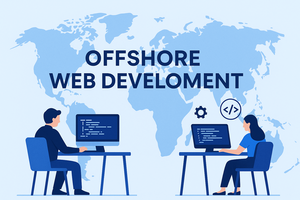
Offshore Web Development The Complete 2025 Guide for Businesses Introduction The Rise of Offshore Web Development Full detail
Category: Web Development
-
Sub Category: Web Hosting
- Name: Offshore Web Development The Complete 2025 Guide for Businesses Introduction The Rise of Offshore Web Development
The digital world is expanding faster than ever. Businesses of all sizes—from startups to global enterprises—are racing to build modern, scalable, and user-friendly websites. But hiring local developers can be expensive and sometimes limited by the availability of specialized skills. That’s where offshore web development comes in.
By outsourcing projects to offshore teams, companies can access global talent, reduce costs, and speed up delivery times. From India and Ukraine to the Philippines and Vietnam, offshore development centers have become hotspots for web solutions. But is it right for your business? This guide explores everything you need to know: benefits, risks, costs, strategies, and best practices in 2025.
What is Offshore Web Development?
Offshore web development means outsourcing your website or application development to a team located in another country, usually in regions where labor costs are lower and technical talent is abundant.
-
Example: A U.S. startup hiring developers from India or Vietnam.
-
Example: A European company outsourcing to Ukraine or Poland.
Unlike hiring freelancers for one-time gigs, offshore development often involves dedicated teams or agencies that provide long-term support.
Why Companies Choose Offshore Development in 2025
There are several reasons why offshore development continues to grow in popularity:
-
Cost reduction of up to 70%.
-
Access to specialized talent (AI, blockchain, cloud, etc.).
-
Scalability with flexible team sizes.
-
Round-the-clock productivity due to time zone differences.
-
Focus on business growth while technical experts handle development.
For many businesses, it’s not just about saving money—it’s about building smarter and faster.
Benefits of Offshore Web Development
1. Significant Cost Savings
Hiring developers in the U.S. or Western Europe can cost $100–$150 per hour. Offshore developers, on the other hand, often charge between $20–$50 per hour without compromising on quality. Over a 12-month project, this can translate into hundreds of thousands of dollars in savings.
2. Access to Global Talent
Offshore teams often bring specialized expertise in frameworks like React, Angular, Laravel, or Django. You’re not limited to the skills available in your local market—you can hire the best person for the job, globally.
3. Faster Time-to-Market
With developers working in different time zones, projects progress almost around the clock. This makes offshore development ideal for startups that need to launch quickly or enterprises scaling new platforms.
4. Flexibility and Scalability
Offshore teams can be easily scaled up or down based on project requirements. Instead of hiring full-time staff, businesses can bring in offshore experts for short-term or ongoing needs.
Risks and Challenges of Offshore Web Development
While offshore development is attractive, it comes with challenges:
-
Communication barriers due to language and time zones.
-
Quality control if vendors are not properly vetted.
-
Security risks when sharing sensitive data.
-
Cultural differences affecting work styles and expectations.
-
Hidden costs in project management or delays.
Understanding these risks helps businesses build strategies to overcome them.
Offshore vs Nearshore vs Onshore Development
Onshore Development
-
Hiring locally within your own country.
-
Higher costs but easier communication.
Nearshore Development
-
Outsourcing to a nearby country in a similar time zone (e.g., U.S. to Mexico).
-
Balance of cost savings and communication convenience.
Offshore Development
-
Outsourcing to distant countries (e.g., U.S. to India or Ukraine).
-
Maximum cost savings but requires better communication management.
Best Countries for Offshore Web Development in 2025
India
-
Largest pool of IT professionals.
-
Strong English proficiency.
-
Affordable pricing ($20–$40/hour).
Ukraine
-
Known for complex projects and custom software.
-
Skilled in PHP, JavaScript, and blockchain.
-
Rates: $30–$50/hour.
Philippines
-
Excellent English skills.
-
Great for combined support + development.
-
Rates: $25–$40/hour.
Vietnam
-
Fast-growing tech hub.
-
Competitive rates ($20–$35/hour).
Poland
-
Part of the EU, strict compliance.
-
Skilled in enterprise-level apps.
-
Rates: $40–$60/hour.
Services Offered by Offshore Development Teams
-
Custom Website Development (WordPress, Drupal, Joomla).
-
Web Application Development (React, Angular, Vue.js).
-
E-commerce Solutions (Shopify, WooCommerce, Magento).
-
UI/UX Design for better user experiences.
-
Mobile-First Responsive Websites.
-
CMS Development for easy content management.
Cost Breakdown of Offshore Web Development
Here’s a cost comparison (per hour):
-
U.S./UK: $100–$150
-
Eastern Europe: $30–$60
-
South Asia: $20–$40
-
Southeast Asia: $20–$35
Example: A U.S. e-commerce site build might cost $50,000–$100,000 locally but only $15,000–$30,000 offshore.
Communication and Time Zone Management
One of the biggest hurdles is time zones. Solutions include:
-
Setting overlapping hours for meetings.
-
Using tools like Slack, Zoom, and Asana for collaboration.
-
Documenting requirements clearly.
Some companies turn this into an advantage, enjoying 24/7 development cycles.
Project Management Best Practices
-
Adopt Agile methodology with sprints.
-
Schedule weekly demos and updates.
-
Use Trello, Jira, or Monday.com for task tracking.
-
Maintain clear documentation for every phase.
Protecting Intellectual Property in Offshore Development
Security is crucial. Protect yourself by:
-
Signing NDAs with developers.
-
Using secure repositories (GitHub, GitLab).
-
Ensuring the vendor complies with GDPR or global standards.
-
Restricting access to sensitive data.
Offshore Development for Startups
Startups benefit the most:
-
Build MVPs quickly at low cost.
-
Scale development teams flexibly.
-
Access experts without hiring full-time staff.
Offshore Development for Enterprises
Large organizations also leverage offshore teams:
-
Handle large-scale digital transformation.
-
Run multiple global projects simultaneously.
-
Provide round-the-clock IT support.
Common Mistakes to Avoid
-
Choosing the cheapest vendor without checking quality.
-
Poorly defined requirements.
-
Lack of communication tools.
-
Ignoring cultural training.
Case Study: A Successful Offshore Project
A U.S. SaaS startup outsourced development to a team in Vietnam.
-
Savings: 60% compared to hiring locally.
-
MVP launched 3 months earlier than planned.
-
Scaled from 3 to 12 developers in 6 months.
The key was choosing the right partner and clear communication.
Future Trends in Offshore Development
-
Increased adoption of AI-powered project management.
-
More hybrid models (onshore + offshore).
-
Stronger demand for cybersecurity specialists.
-
Growth of cloud-native development offshore.
Conclusion: Should You Go Offshore?
Offshore web development is not a silver bullet, but in 2025, it’s one of the most cost-effective ways to build modern websites and applications. If you’re prepared to manage communication and choose the right partner, you can enjoy:
-
Lower costs.
-
Global expertise.
-
Faster time-to-market.